





Brut or demi-sec champagne: what’s the difference and how to choose?
When faced with the champagne aisle, one question often arises: should you choose a brut or a demi-sec? These two of the best-known terms correspond to very different tasting styles. The difference lies mainly in the sugar dosage, which directly influences the taste, food pairings, and occasions for enjoyment.
In short: a brut champagne contains less than 12 g of sugar per litre and offers a fresh, lively profile. A demi-sec champagne contains between 32 and 50 g/L of sugar and develops more roundness and richness. Brut is ideally suited to aperitifs and meals, while demi-sec reveals its full potential with dessert or sweet-and-savoury pairings.
The essentials in brief
- The difference between a brut and a demi-sec lies in the sugar content.
- Brut contains less than 12 g/L of sugar; demi-sec contains between 32 and 50 g/L.
- Brut is lively, fresh, and versatile.
- Demi-sec is round, rich, and particularly suited to desserts.
- The sugar in the champagne should generally be at least equal to that of the dish to maintain the balance of the pairing.
- Brut accompanies aperitifs and meals; demi-sec often concludes the tasting on a gentle note.
Brut or demi-sec: it’s all about the sugar
What distinguishes a brut champagne from a demi-sec champagne is neither the grape variety, nor the terroir, nor the production method. The difference lies in the dosage, i.e. the amount of sugar added after disgorgement in the form of liqueur d’expédition.
This final step makes it possible to adjust the style of the cuvée, from the driest champagnes to the sweetest.
The regulatory thresholds are precise:
- Brut: less than 12 g of sugar per litre.
- Demi-sec: between 32 and 50 g of sugar per litre.
These terms must appear on the label and provide a simple guide for choosing a cuvée suited to your tastes and the occasion.
Brut champagne: lively, dry, and gastronomic
Brut is now the most consumed style of champagne. Its low dosage highlights the wine’s natural freshness, acidity, and the purity of its aromas.
On the palate, it often expresses notes of fresh fruit, citrus, white flowers, or yellow-fleshed fruit, supported by a fine tension.
This freshness explains its great versatility at the table. Brut is equally suited to an aperitif or a full meal.
Nicolas Feuillatte’s Réserve Exclusive Brut
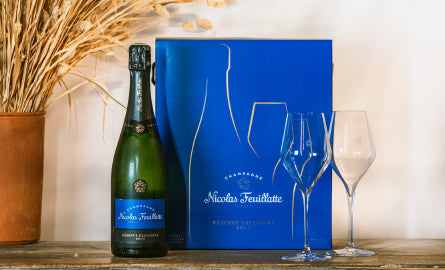
Réserve Exclusive Brut perfectly illustrates this style. This flagship cuvée from the House reveals expressive fruit, driven by notes of pear and apricot, combined with a fine freshness. Its balance allows it to adapt to many occasions.
Réserve Exclusive Brut
Lively and fruity • The House’s signature cuvée
Discover the cuvée: Réserve Exclusive Brut

Demi-sec champagne: round, rich, and festive
In contrast to brut, demi-sec focuses on generosity and richness. Its higher dosage provides a more enveloping sensation and reveals more mature aromas.
Notes of candied fruit, honey, brioche, dried fruit, and pastry are often found. Thanks to the effervescence, however, this sweetness retains its balance and freshness.
Nicolas Feuillatte’s Réserve Exclusive Demi-Sec
Réserve Exclusive Demi-Sec develops notes of apricot, grape, almond, and vanilla. On the palate, it evokes candied fruit, hazelnut, honey, and toasted bread. A cuvée particularly suited to indulgent pairings.
Réserve Exclusive Demi-Sec
Roundness and richness • Candied fruit, honey, and hazelnut
Discover the cuvée: Réserve Exclusive Demi-Sec

How sugar changes the taste of champagne
Dosage does not only change the perception of sugar. It influences the overall balance of the wine.
In a brut champagne, the low dosage highlights freshness, acidity, and minerality. The tasting feels more tense, more direct, and more refreshing.
In a demi-sec, the sugar softens the sensation of acidity, adds more volume to the palate, and promotes the expression of richer aromas. The wine then feels fuller and more velvety.
Starting from the same blend, dosage can therefore lead to two very different tasting experiences.
The key principle of food and champagne pairings
One simple rule helps you get your pairings right: the sugar level of the champagne should be at least equal to that of the dish.
A very sweet dessert enjoyed with a brut champagne can make the latter seem more acidic and austere. In contrast, a demi-sec maintains the harmony of the whole thanks to its natural sweetness.
When to serve brut champagne?
Thanks to its freshness and balance, brut is the most versatile champagne.
- For an aperitif: it stimulates the palate and pairs easily with snacks.
- With seafood: oysters, shellfish, sushi, and tartare pair perfectly with its natural tension.
- With fish and white meats: its freshness supports the flavours without overpowering them.
- Throughout the meal: some cuvées can elegantly accompany several courses.
When to serve demi-sec champagne?
Demi-sec finds its place when indulgence takes centre stage.
- With dessert: fruit tarts, pastries, brioche, or panettone.
- With foie gras: especially when accompanied by figs, chutney, or jelly.
- With blue cheeses: Roquefort, Fourme d’Ambert, or Gorgonzola.
- At a brunch: viennoiseries, fruit salad, and indulgent treats.
The sommelier’s tip
To preserve its balance, serve demi-sec champagne between 6 and 8°C. This temperature accentuates the freshness and allows the candied fruit aromas to express themselves with greater finesse.
The different champagne dosages: from brut nature to sweet
Brut and demi-sec represent only part of the champagne dosage scale.
- Brut Nature: less than 3 g/L of sugar.
- Extra-Brut: less than 6 g/L.
- Brut: less than 12 g/L.
- Extra-Dry: between 12 and 17 g/L.
- Dry: between 17 and 32 g/L.
- Demi-Sec: between 32 and 50 g/L.
- Sweet: more than 50 g/L.
Freshness lovers often favour the Brut Nature and Extra-Brut categories. Dry, Demi-Sec, and Sweet dosages are better suited to indulgent moments and desserts.

So, brut or demi-sec?
There is no single best choice. It all depends on the tasting context and the flavours that accompany it.
Brut appeals with its freshness, precision, and versatility. Demi-sec, meanwhile, offers more roundness and pairs naturally with desserts and sweet-and-savoury preparations.
To accompany the entire evening, it is often ideal to have both styles: a brut for the aperitif and meal, then a demi-sec to prolong the pleasure at dessert.
With its Réserve Exclusive range, Nicolas Feuillatte offers two complementary expressions that allow you to adapt the champagne to every moment of enjoyment.
In a few words
Between a brut champagne and a demi-sec champagne, it all comes down to the dosage. Brut, which is less sweet, highlights freshness and easily accompanies both an aperitif and a meal. Demi-sec, which is richer, reveals its full richness with desserts and sweet-and-savoury pairings. Understanding this difference allows you to choose the cuvée best suited to each occasion. You can also find our complete guide to Champagne here
FAQ: everything you need to know about champagne’s sugar content
What is the difference between a brut champagne and a demi-sec champagne?
The difference lies in the sugar dosage. A brut contains less than 12 g/L, while a demi-sec contains between 32 and 50 g/L.
Which champagne is the least sweet?
Brut Nature champagne is the least dosaged category, with less than 3 g of sugar per litre.
Which champagne should you choose for dessert?
Demi-sec is generally the most suited thanks to its roundness and higher sugar level.
What is the difference between extra-brut and brut?
Extra-brut contains less than 6 g/L of sugar, while brut can contain up to 12 g/L. Extra-brut often offers a more tense and mineral sensation.
Why does a brut champagne sometimes seem acidic with dessert?
The sugar in the dessert accentuates the perception of the wine’s acidity. This is why a demi-sec is generally more harmonious with pastries and fruity desserts.


