








Foie gras and champagne: how to achieve the perfect pairing
Foie gras and champagne make an iconic pairing at festive tables. However, to maintain their balance, you must choose the cuvée according to the preparation of the foie gras, its intensity, and its accompaniments. Plain terrine, pan-seared foie gras, chutney, or gingerbread all call for a different style of champagne.

What champagne should you serve with foie gras? A fresh Brut is generally suitable for a plain terrine, while a more structured vintage champagne is a better match for pan-seared foie gras. With chutney, a roasted fig, or gingerbread, a rounder cuvée, such as a Demi-Sec or certain rosé champagnes, creates a more harmonious pairing.
Why does champagne pair well with foie gras?
Foie gras has a rich, melting, and lingering texture. The freshness and effervescence of champagne bring definition to the tasting experience. They balance the creaminess of the dish and refresh the palate between bites.
The contrast works as long as you respect the intensity of the preparation. A cuvée that is too light may fade against pan-seared foie gras, while a champagne that is too round risks weighing down a plain terrine.
The essential rule: choose the champagne based on the preparation of the foie gras, but also on what accompanies it on the plate.
Champagne or sweet wine: which should you choose with foie gras?
Sweet wines are among the traditional pairings with foie gras. Their sweetness readily complements a recipe featuring fig, chutney, or a caramelized note. However, on a plain terrine, their richness may reinforce the sensation of roundness.
Champagne offers a different balance. A Brut focuses on freshness and liveliness, while a Demi-Sec is better suited to sweet accompaniments. There is therefore no single pairing, but rather several possibilities depending on the recipe and the desired effect.
To better distinguish the different dosage categories, consult our guide to understand a champagne label.
What champagne should you serve with semi-cooked foie gras or terrine?
With a plain terrine, opt for a fresh, balanced, and expressive Brut champagne. It complements the melting texture of the foie gras without masking its delicacy.
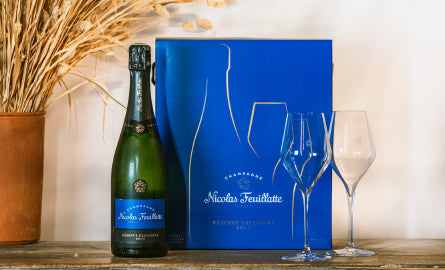
The Réserve Exclusive Brut offers an airy, dynamic, and fruity style. It is an accessible pairing option for a semi-cooked terrine, lightly toasted brioche, and a few grains of fleur de sel.
Discover the Réserve Exclusive Brut
What if the terrine is spiced or more rustic?
A terrine enhanced with pepper, sweet spices, or more roasted notes requires more structure. A Blanc de Noirs or a vintage champagne can then offer more depth while maintaining the freshness necessary for balance.
What champagne should you choose with pan-seared foie gras?
Pan-seared foie gras generally calls for a more structured vintage champagne. Cooking develops roasted and caramelized notes, while the texture becomes more intense. The cuvée must therefore have enough substance to remain present in the pairing.
The Brut Millésime 2018, made with equal parts Chardonnay, Pinot Noir, and Meunier, features a structure suited to fine dining. Its fruity notes, citrus, and sweet spices can echo the generous character of hot foie gras.
What champagne with foie gras with fig or chutney?
A sweet garnish calls for a rounder cuvée to avoid too stark a contrast. Roasted fig, caramelized onions, fruit chutney, or jelly do indeed alter the balance of the plate.
A Demi-Sec champagne can complement this sweetness thanks to its more generous profile. The Réserve Exclusive Demi-Sec notably develops notes of candied fruit, hazelnut, toasted bread, and honey. However, to keep the overall experience balanced, it is better to use the chutney in moderation.
Can you serve rosé champagne with foie gras?
Yes, especially when the foie gras is accompanied by red fruits or a garnish with fruity notes. The choice of rosé should then echo the accompaniment rather than rely solely on the color of the wine.
With its expressions of redcurrant, blueberry, raspberry, and strawberry, the Réserve Exclusive Rosé can accompany a recipe featuring red fruits, lightly sweetened gingerbread, or a slightly tart fruity condiment.
What pairing should you reserve for special occasions?
For a festive dinner, a prestige cuvée can accompany simply served foie gras, without an accumulation of condiments. The goal is to let both the champagne and the dish express themselves.
A finely seasoned terrine, toasted brioche, and a touch of fleur de sel then make up a simple plate. This simplicity promotes a precise pairing and highlights the complexity of the chosen cuvée.
What accompaniments should you choose with foie gras and champagne?
The accompaniment directly influences the style of champagne to favor. To make the pairing a success, it is best to limit the number of flavors present on the plate.
- Plain terrine and toasted brioche: a fresh and fruity Brut.
- Pan-seared foie gras: a vintage champagne or a more structured cuvée.
- Fig, chutney, or caramelized onions: a Demi-Sec served with a moderately sweet condiment.
- Red fruits: a rosé champagne with a fresh and fruity profile.
- Pepper and fleur de sel: a Brut or Blanc de Noirs with enough character.
Conversely, an excess of vinegar, chili, or powerful spices can overpower the champagne. Sobriety often remains the best way to preserve the delicacy of the foie gras and the cuvée.
How should you serve foie gras with champagne?
At what temperature should champagne be served?
At the table, champagne can be served between 10 and 12°C to preserve its freshness without reducing its aromatic expression. A complex or vintage cuvée generally benefits from not being served too cold.
When should you take the foie gras out of the refrigerator?
Foie gras should remain cool, but not ice-cold. Taking it out about fifteen minutes before tasting generally allows its texture to soften and its aromas to express themselves better.
What bread should you serve?
A lightly toasted brioche or a plain bread pairs well with a plain terrine. Gingerbread is better suited to a gourmet pairing with a round or fruity cuvée. It is best to avoid bread that is too acidic, heavily toasted, or strongly flavored, as it risks overpowering the dish.
In what order should you serve several cuvées?
Start with the freshest and driest champagne, then continue with the more structured or sweeter cuvées. This progression respects the sensitivity of the palate and prevents a delicate wine from being overshadowed by the one before it.
The choice of glass also contributes to the expression of the aromas. Find our tips on what glass to serve champagne in.
What mistakes should you avoid with foie gras and champagne?
- Choosing a cuvée that is too round with a plain terrine: without a sweet garnish, a Brut generally provides more balance.
- Serving a cuvée that is too light with pan-seared foie gras: the hot preparation requires more structure and presence.
- Serving champagne ice-cold: a temperature that is too low limits the perception of aromas.
- Accumulating condiments: fig, chutney, spices, and gingerbread all together on the same plate make the pairing difficult to appreciate.
- Choosing the cuvée based solely on the foie gras: the sauce, bread, and garnish can alter the pairing as much as the main preparation.
How to create a balanced festive pairing?
For an elegant and easy-to-share starter, pair a semi-cooked terrine, lightly toasted brioche, and a Brut Champagne. If the foie gras is pan-seared, choose a more structured cuvée and serve a simple garnish.
With a chutney or roasted fig, a Demi-Sec cuvée provides a more indulgent response. A rosé champagne can, meanwhile, create an original pairing when the plate features red fruits or a fruity condiment.
In any case, the most successful pairing is one that maintains a balance between the richness of the foie gras, the freshness of the champagne, and the intensity of the accompaniment.
Frequently asked questions about foie gras and champagne
What is the best champagne with foie gras?
The best choice depends on the recipe: a Brut with a plain terrine, a vintage with pan-seared foie gras, and a rounder cuvée with a sweet accompaniment.
Should you choose a Brut or Demi-Sec champagne?
A Brut is generally suitable for plain foie gras. A Demi-Sec is better suited when the plate features chutney, roasted fig, confit, or another sweet garnish.
Can you serve rosé champagne with foie gras?
Yes. A rosé champagne can accompany foie gras when the recipe includes red fruits, a fruity condiment, or lightly sweetened gingerbread.
What champagne should you serve with pan-seared foie gras?
A vintage champagne or structured cuvée is generally preferable, as pan-seared foie gras has more intense flavors and caramelized notes.
At what temperature should champagne be served with foie gras?
For table service, a temperature between 10 and 12°C allows the champagne to retain its freshness while letting its aromas express themselves.
Can you serve the same champagne throughout the meal?
Yes, provided you choose a cuvée balanced enough to accompany the different dishes. A versatile Brut can start with a foie gras terrine and continue with certain fish or poultry dishes.
In a few words
To make the pairing between foie gras and champagne a success, start with the preparation and its accompaniment. Choose a fresh Brut with a plain terrine, a more structured vintage champagne with pan-seared foie gras, a Demi-Sec with chutney, and a rosé with a fruity garnish. Serve the whole experience simply, at the right temperature, and enjoy a pairing designed for sharing.


